
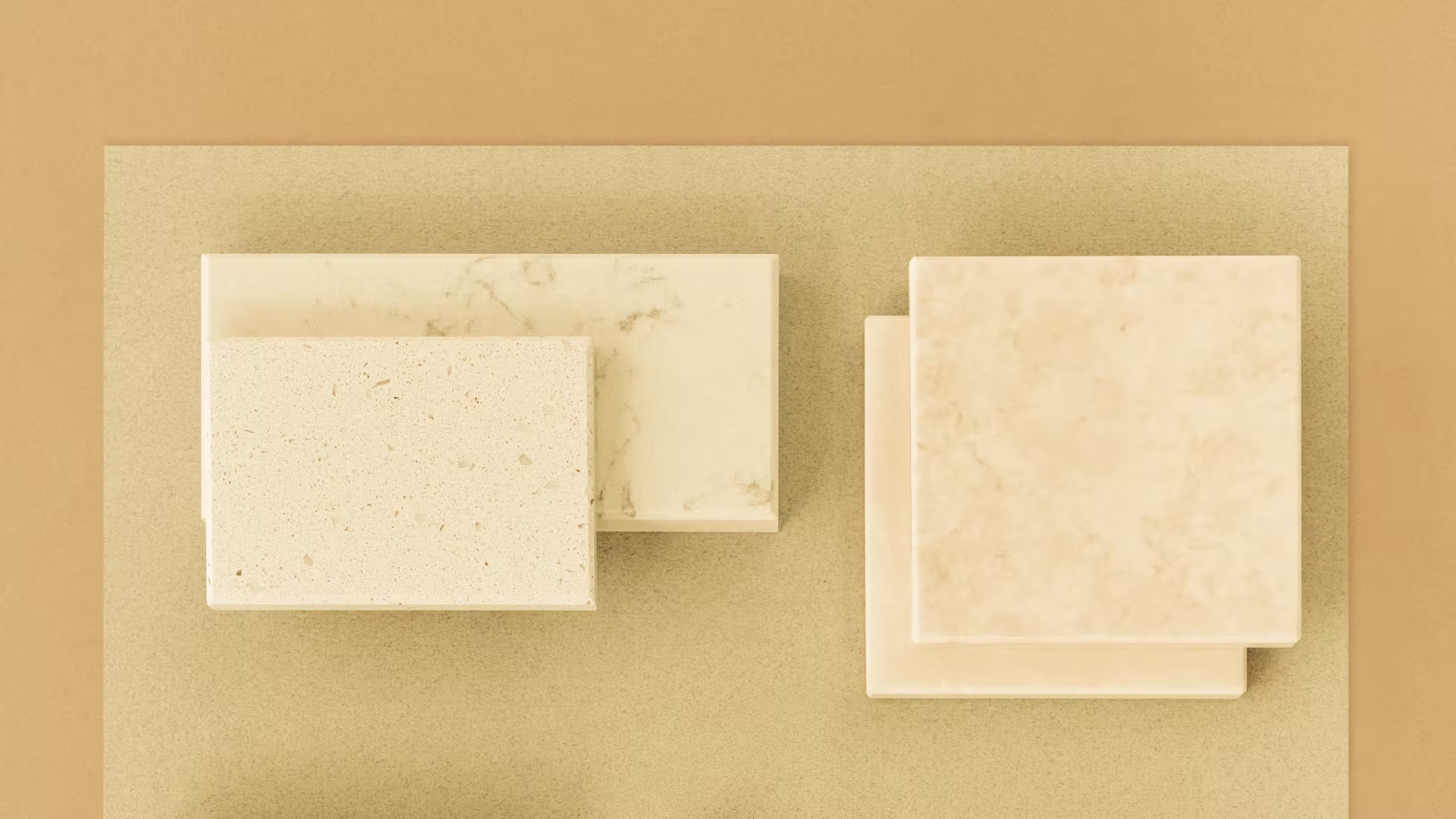
Every Konn home is built on the same reinforced concrete structure, manufactured off-site with factory precision, assembled on-site, and designed to last generations. The structure doesn't change between tiers. What changes is everything you see, touch, and live with daily: the ceiling height above your head, the floor beneath your feet, the way your home is heated, and the way it's cooled.
Origin and Prime are Konn's two finish tiers. This is how they compare and how to decide which is right for your home.
The structure is the same
This is the most important thing to understand. Origin and Prime are not different build qualities. They share the same reinforced concrete structure, the same sealed building envelope, the same waterproofing, the same foundation engineering, and the same assembly process. A Konn home built to Origin specification is structurally identical to one built to Prime.
The difference lives in three areas: ceiling heights, interior finishes, and MEP systems.
Ceiling height
Origin: 3.6 metres total building height, with interior clear height up to 3 metres.
Prime: 4 metres total building height, with interior clear height up to 3.24 metres. Prime also offers double-volume spaces, full-height areas that span two floors, creating dramatic living rooms, entrance halls, or stairwells.
The 24-centimetre difference in ceiling height may sound small on paper. In a room, you feel it. Higher ceilings make spaces feel larger, allow more natural light to penetrate deeper into the plan, and give the architecture room to breathe. Double-volume spaces (available only in Prime) fundamentally change the character of a home.
If you're building a compact home where every square metre counts, Origin's 3-metre ceiling is generous by any standard. If the feeling of openness and spatial drama matters to you, Prime's taller ceilings and double-volume option deliver it.
Interior finishes
Origin includes Grade A finishes throughout: gypsum board false ceilings, porcelain tile flooring, standard sanitary fixtures, aluminum windows, and interior doors. These are quality materials, practical, durable, and clean. Origin is not a "basic" tier. It's a refined, well-specified home that's ready to live in.
Prime upgrades every surface and fixture: upgraded luxury porcelain tiles, premium sanitary ware from European brands, enhanced window and door specifications, and elevated ceiling and wall treatments. Prime finishes are selected for their material quality, tactile character, and visual refinement.
The difference is not between "low quality" and "high quality." It's between a well-finished home and one where the finishes themselves become part of the architecture, where the materials you touch and see every day carry additional weight and presence.
Heating
Origin: Central radiator heating system with a gas boiler. Radiators are mounted on walls in each room, connected to a central boiler. This is the most common heating system in Jordanian homes, reliable, well-understood, and easy to maintain. The trade-off is that radiators occupy wall space and heat rooms unevenly, with warmer air rising to the ceiling and cooler air settling at floor level.
Prime: Underfloor heating system with a gas boiler. Hot water runs through pipes embedded in the floor slab, heating the room from the ground up. The result is even heat distribution, warm where you stand, not where you don't. No radiators on walls. No cold spots. The floor itself becomes the heating element, freeing wall space and creating a cleaner interior.
Underfloor heating costs more to install but is more energy-efficient in operation. It pairs particularly well with porcelain and stone flooring, which conduct and retain heat effectively. For homes in Amman and the highlands (where winters are cold and long) underfloor heating is a significant quality-of-life upgrade.
Air conditioning
Origin: Wall-mount split AC units. Each room or zone has its own indoor unit mounted on the wall, connected to an outdoor compressor. Split units are affordable, easy to install, and simple to maintain. The trade-off is visibility, indoor units are prominent on walls and require placement planning to avoid conflicting with furniture and window layouts.
Prime: Ducted split central air conditioning system. Cooled air is distributed through concealed ducts in the ceiling, with only discreet grilles visible in each room. A single outdoor unit serves the entire home. The result is invisible climate control, no wall units, no visual clutter, and more consistent air distribution throughout the home.
Ducted systems cost more upfront and require ceiling space for ductwork, which is one reason Prime's taller building height matters, it accommodates the ducts while maintaining generous interior clear height.
How to decide
There's no wrong choice. Both tiers produce a move-in-ready home built on the same permanent structure. The decision comes down to priorities:
Choose Origin if your priority is a well-built, well-finished home at a lower total cost. Origin delivers quality across every element without the premium that comes with upgraded finishes and systems. It's the right choice if you'd rather allocate budget to a larger home, more outdoor space, or furnishing.
Choose Prime if the interior experience matters as much as the architecture. Taller ceilings, invisible climate systems, underfloor heating, and upgraded materials create a home where the finishes contribute to how the space feels, not just how it looks. Prime is for homeowners who want to feel the difference daily.
You don't need to decide your tier before ordering a DesignFit. The DesignFit provides a cost range for both Origin and Prime, so you can compare and decide with real numbers in front of you.
See the full specifications
For a detailed comparison of every specification (structure, envelope, glass, MEP, and exterior) visit the Specifications page.