
You're living in the Gulf, in Europe, in North America, and you want to build a home in Jordan. Maybe it's for your family. Maybe it's for retirement. Maybe it's an investment you've been planning for years. The desire is clear. The challenge is execution.
Building a home is complicated when you're standing on the site every day. Building one from 3,000 kilometres away (managing an architect, a contractor, decisions, payments, and approvals through phone calls and WhatsApp messages) is a different challenge entirely.
This is a practical guide to how it works, what goes wrong, and how to set yourself up for a project you can manage from anywhere.
The traditional approach and why it breaks down
The way most Jordanians abroad build a home follows a familiar pattern: a family member or friend is asked to oversee the project. An architect is hired through a recommendation. A contractor is found locally. Communication happens through phone calls, voice notes, and photos sent on WhatsApp.
It can work. But it frequently doesn't, and the reasons are predictable.
The intermediary isn't a professional. Your brother, cousin, or friend has their own life. They're doing you a favour, and favours have limits. When a decision needs to be made on a Thursday afternoon and you're eight hours behind in California, the decision either waits (delaying the project) or gets made without you.
Communication is fragmented. The architect sends drawings by email. The contractor sends site photos on WhatsApp. Your family member relays information verbally, often losing technical detail. You're piecing together the status of your project from fragments, and you're never quite sure if what you're seeing is the full picture.
Cost control is difficult from a distance. Change orders, "unexpected" conditions, and scope creep are harder to challenge when you can't walk the site. Costs accumulate through a series of small approvals that individually seem reasonable but collectively blow the budget.
Quality verification requires presence. Photos don't show everything. A wall that looks straight in a photo might not be plumb. Tile work that looks fine at arm's length might have uneven grout lines. By the time you visit and see the issues, correcting them is expensive, or impossible.
What to get right before you start
If you're building from abroad, the decisions you make before construction starts matter more than they do for someone who can visit the site weekly.
Choose an integrated service, not separate players. The more parties involved (architect, contractor, project manager, family intermediary) the more communication gaps exist. Every handoff is a point where information gets lost. An integrated design-and-build service, where one team handles the project from design through construction, eliminates the handoffs that cause most remote-build problems.
Get the design and price locked before construction begins. The most dangerous moment in a remote build is when construction starts with an incomplete design or an open-ended budget. Changes during construction are expensive when you're on-site. When you're remote, they're expensive and invisible, you often don't know a change was made until you see the invoice.
Establish a single communication channel. Don't split communication between email, WhatsApp, phone calls, and a family member. Choose one channel where all decisions, approvals, and updates are documented. WhatsApp works well for this, it's fast, supports images and documents, and creates a timestamped record of every conversation.
Define the decision-making process upfront. Who can approve a material substitution? Who authorises a payment? What requires your explicit approval and what can proceed without you? These rules need to be agreed before the first brick is laid, not negotiated in real-time across time zones.
Managing the project remotely
Once construction starts, your ability to stay informed and in control depends on the systems in place.
Regular visual updates. Weekly site photos or short video walkthroughs are the minimum. These should be taken at the same angles each time so you can see progress, not random snapshots that don't give you context.
Milestone-based payments. Never pay ahead of work. Structure payments around completed milestones, foundation complete, structure complete, MEP roughed in, finishes complete. Each payment is released after you've seen evidence of the completed milestone. This is standard practice and any professional builder will accept it.
Document everything. Decisions made verbally get forgotten or disputed. Every approval, every change, every material selection should be confirmed in writing, even if it's just a WhatsApp message that says "Confirmed: we're going with the 60×60 grey porcelain."
Plan your visits. If you can visit Jordan during the project, time your visits to critical milestones: after the foundation, when the structure is complete (before walls are closed), and before final finishes begin. These are the moments when your physical presence has the highest impact on quality and decisions.
Legal and financial considerations
Power of attorney. If someone in Jordan needs to act on your behalf for permits, government transactions, or property-related matters, they'll need a formal power of attorney (وكالة). This can be executed at a Jordanian embassy or consulate abroad. Be specific about the scope, a general power of attorney grants broad authority that may extend beyond what you intend.
Currency and transfers. Construction payments in Jordan are in JOD. If you're earning in another currency, fluctuations affect your real cost. Consider transferring larger amounts when rates are favourable rather than making small frequent transfers. Most banks and exchange services offer better rates for larger transfers.
Tax and ownership. Jordanian nationals and their spouses can own property in Jordan without restriction. Non-Jordanians face ownership restrictions that vary by property type and location. Verify your eligibility before committing to land purchase or construction.
How Konn works for remote buyers
Konn's process was designed for exactly this situation. One team handles your entire project (design, pricing, permits, manufacturing, and construction) with a single point of contact who communicates via WhatsApp.
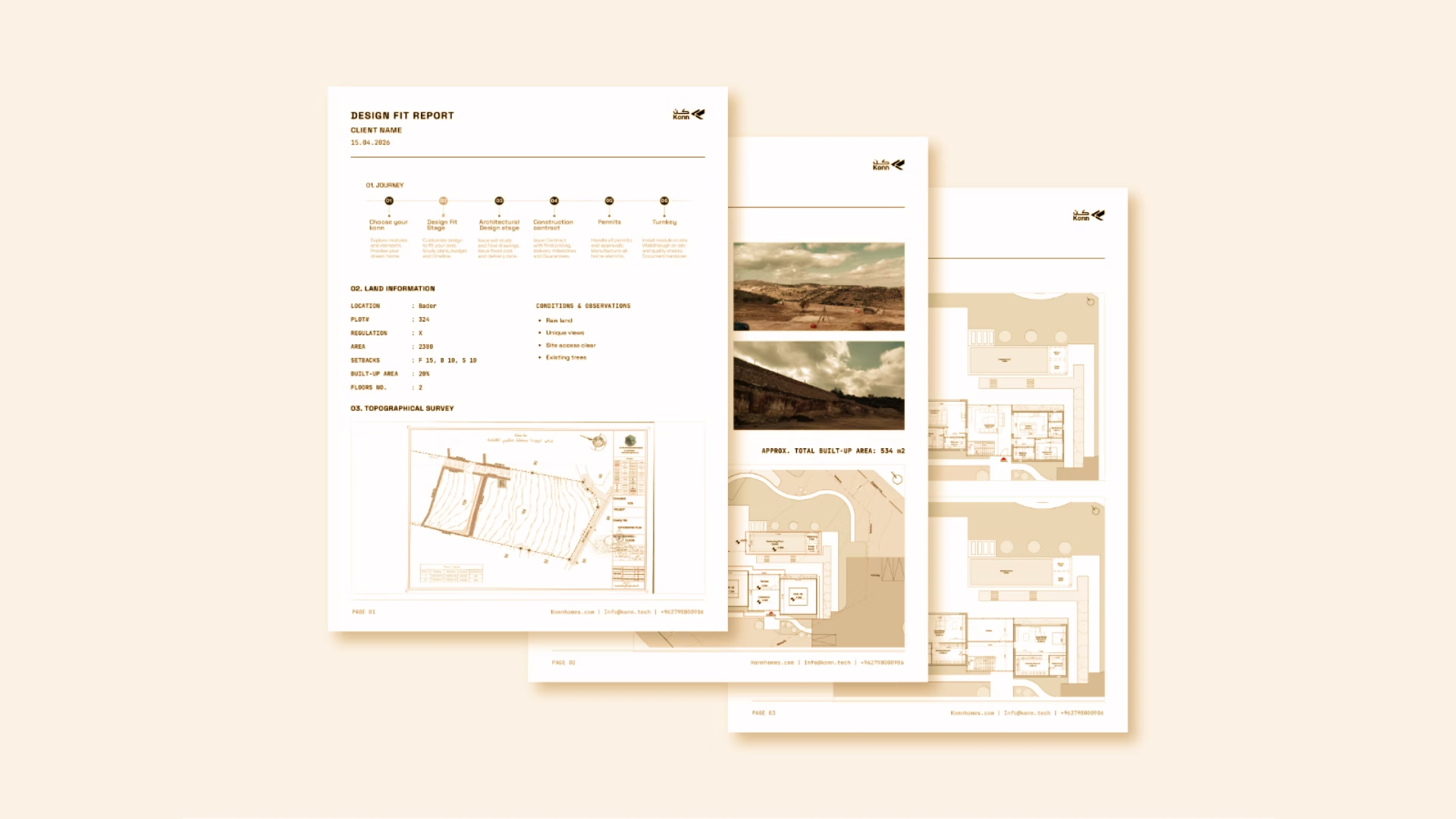
[DesignFit](/blog/what-is-designfit) is fully remote. You order online, pay by card, and share your requirements through a digital form. Your Konn architect reaches out on WhatsApp and delivers your complete DesignFit report (layouts, site plan, cost range, timeline) within 10 days. You don't need to be in Jordan to start.
Your price is locked before construction begins. After ArchDesign, you receive a locked-in construction price. No change orders. No "we discovered something on-site" additions. The number you approve is the number you pay, whether you're in Amman or Abu Dhabi.
WhatsApp-first communication. Your dedicated architect manages all communication through WhatsApp. Updates, decisions, approvals, and document sharing all happen in one place with a full timestamped record.
Off-site manufacturing. Because Konn manufactures structural components in a factory (not on your site) the quality control happens in a controlled environment, not in the open air where you can't see it. What arrives on-site has already been built to specification.
Status tracking. You can check your project status online at any time through your personal status page, no app to download, no portal to log into. Just a link.
If you're planning a home from abroad and want to start with clarity (what you can build, what it costs, and how long it takes) a DesignFit is the first step. It's designed to work from anywhere.