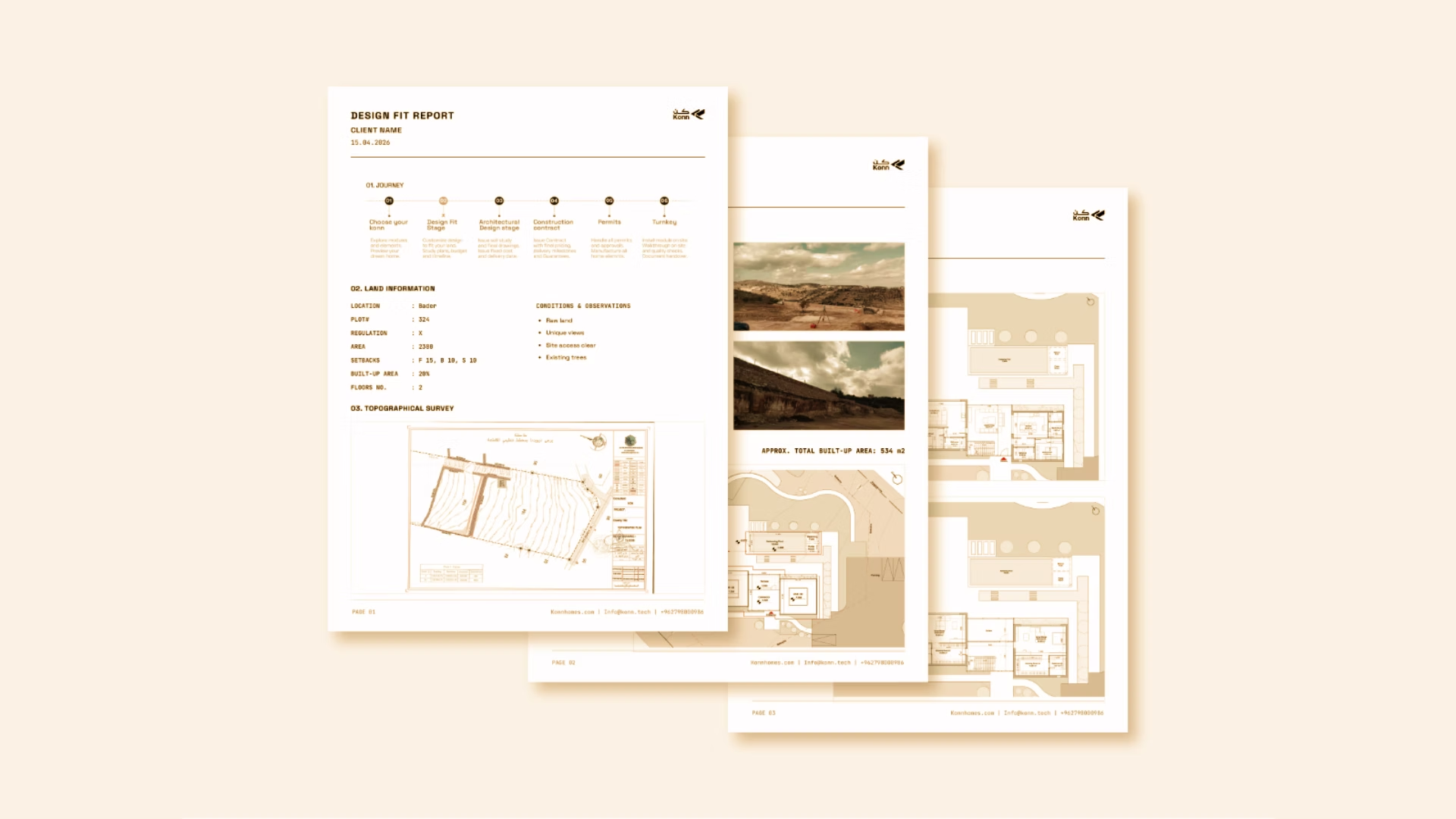

Land ownership is only the beginning. The plot you fall in love with might not be buildable, or it might cost far more to develop than you expected. Zoning restrictions, slope conditions, infrastructure access, and registration status all shape what you can build, how much it will cost, and how long it will take.
This is what to check before you commit.
Verify the registration
All land in Jordan is managed through the Department of Lands and Survey. Before anything else, confirm that the plot is formally registered, that the seller is the legal owner, and that there are no disputes, liens, or encumbrances against it.
Request the title deed (سند تسجيل) and the land plan (مخطط أراضي) from the seller. Cross-check both at the local Land and Survey office. If you're buying through an intermediary, have a property lawyer verify the documents independently, don't rely on the seller's copies alone.
Pay attention to whether the land is classified as private freehold, shared inheritance (مشاع), or state-owned. Shared plots require the consent of all registered co-owners before any transaction or building can take place, and that process can stall indefinitely.
Understand the zoning
Zoning determines what you can build, how large, and how tall. In Jordan, zoning is set by the municipality and defined in the regulatory site plan (مخطط تنظيمي). Each zone has specific regulations for:
Buildable area (نسبة البناء): the percentage of your land you're allowed to build on. This varies widely, from 39% to 55% or more depending on the zone.
Setbacks (الارتدادات): the minimum distance between your building and each boundary. Front, side, and rear setbacks are all regulated separately.
Maximum height: typically defined in number of floors or total metres. Some residential zones cap at two floors; others allow more.
Land use classification: residential, agricultural, commercial, or mixed. Building a home on agriculturally zoned land requires reclassification, which may or may not be possible.
Before purchasing, get the regulatory site plan from the municipality. Don't assume the seller's verbal description of what's allowed is accurate.
Assess the topography
A flat plot and a sloped plot at the same price are not the same deal. Topography affects everything: foundation costs, retaining walls, drainage, site access, and how your home sits on the land.
Steep sites require more extensive foundation work, cut and fill, retaining structures, and sometimes specialised engineering. These costs can add 15–30% to your construction budget depending on the severity. A site survey (مسح طبوغرافي) will tell you exactly what you're working with.
Even moderate slopes change the design possibilities. A site that drops two metres from front to back opens up split-level designs and basement potential, but it also means more complex drainage and potentially difficult vehicle access.
Check infrastructure access
Your land needs to connect to four things: roads, water, electricity, and sewage. The absence of any one can delay or significantly increase the cost of your project.
Road access: Is the plot accessible by an existing road? Is the road paved? If your land is on an unpaved road or has no direct access, you may need to coordinate with the municipality or neighbouring landowners.
Water: Is municipal water supply available on the street? If not, you may need to rely on water tanks and delivery until the network reaches you.
Electricity: Is there an electrical connection available? New connections from the Jordan Electric Power Company (JEPCO) take time and have associated costs.
Sewage: Many areas outside central Amman are not connected to the sewage network. Without it, you'll need a septic system, which has its own regulations and maintenance costs.
Don't assume that because neighbouring plots are built-up, your land has all services. Verify each one independently.
Consider the neighbours
This isn't just about who lives next door. Adjacent construction, boundary walls, shared access roads, and right-of-way easements all affect your design and your quality of life.
Visit the site at different times of day. Check what's being built around you. A plot with beautiful views today could face a four-story building on the adjacent lot next year if the zoning allows it.
Know the permitting process
Building permits in Jordan are issued by the municipality after submission of architectural and structural drawings prepared by licensed engineers. The process involves multiple approvals (architectural, structural, mechanical, and electrical) and the timeline is one of the least predictable parts of any home project.
In practice, permits can take anywhere from 6 weeks to 4 or even 5 months. The timeline depends on the municipality, the complexity of the project, the completeness of your submission, and factors that are largely outside your control. Revisions, additional requirements, and administrative backlogs are common. It is the most opaque part of building a home in Jordan, and almost no one (including experienced professionals) can plan for it with certainty.
This is worth understanding before you buy land, because the permit period sits between completing your design and starting construction. In a traditional build, nothing happens during this time, you wait, and your project stalls.
Konn handles this differently. Because Konn manufactures your home's structural components off-site in a factory, the manufacturing process runs in parallel with the permitting period. While your permit is being processed, your home is already being built. By the time the permit clears, the factory-produced components are ready for delivery and assembly begins immediately. This parallel approach can save months compared to the traditional sequence of: wait for permit → then start construction.
It doesn't make the permit process faster, no one can do that. But it means the wait doesn't cost you time on your total project timeline.
Get a professional assessment before you commit
The safest way to evaluate a plot is to have it assessed by an architect or a specialised land consultant before you purchase. They can verify the zoning, assess the topography, check infrastructure, and estimate what it will cost to develop the site, not just to buy it.
Without a professional assessment, you risk committing to land that costs far more to develop than you expected, or worse, land you can't build on at all.
This is exactly what Konn's DesignFit is designed to do. For a small upfront investment, Konn's architects assess your land (topography, zoning, setbacks, infrastructure) and design floor layouts tailored to your requirements. You receive a site plan, a realistic cost range, and a construction timeline before you commit to building.
If you're evaluating land, a DesignFit turns uncertainty into clarity.